

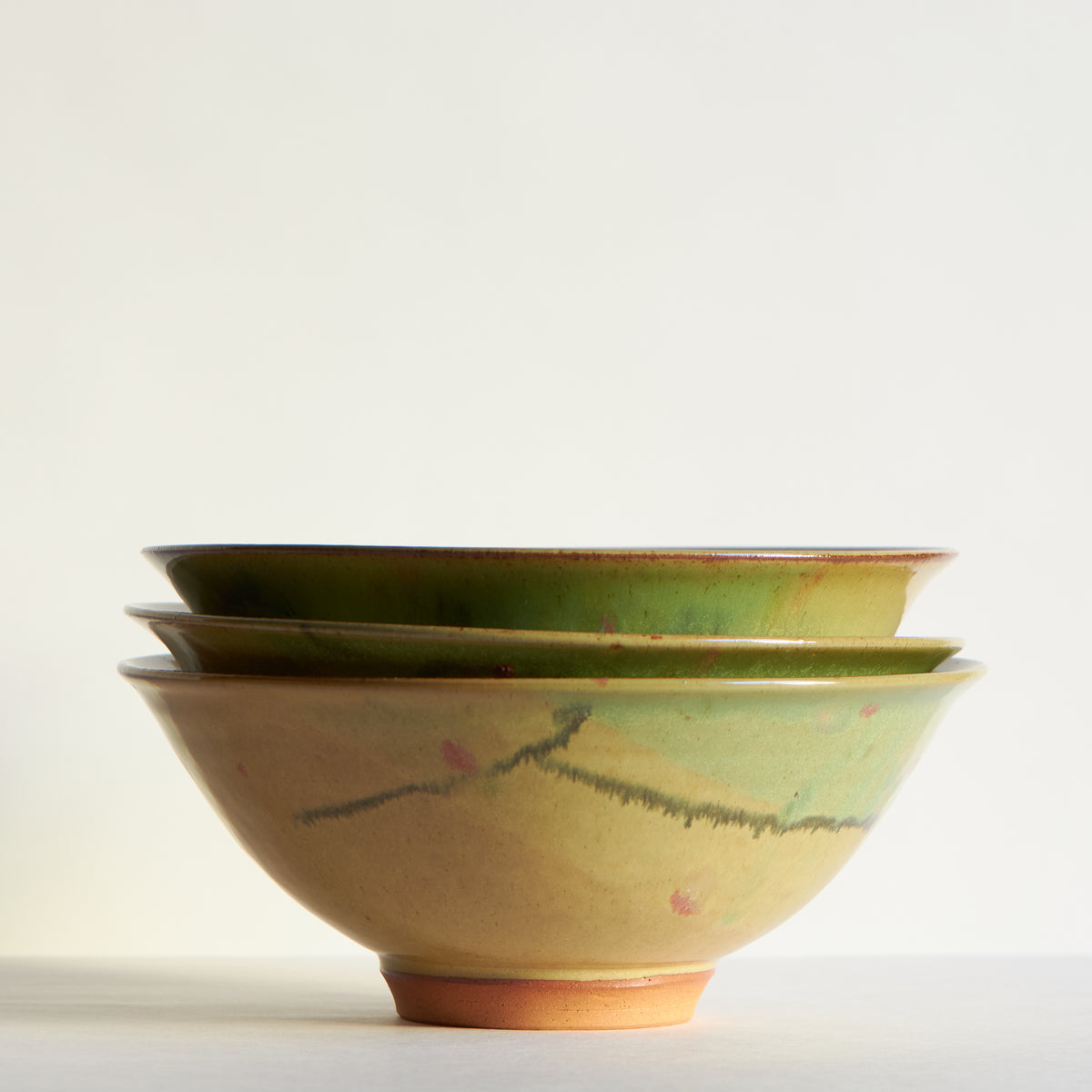
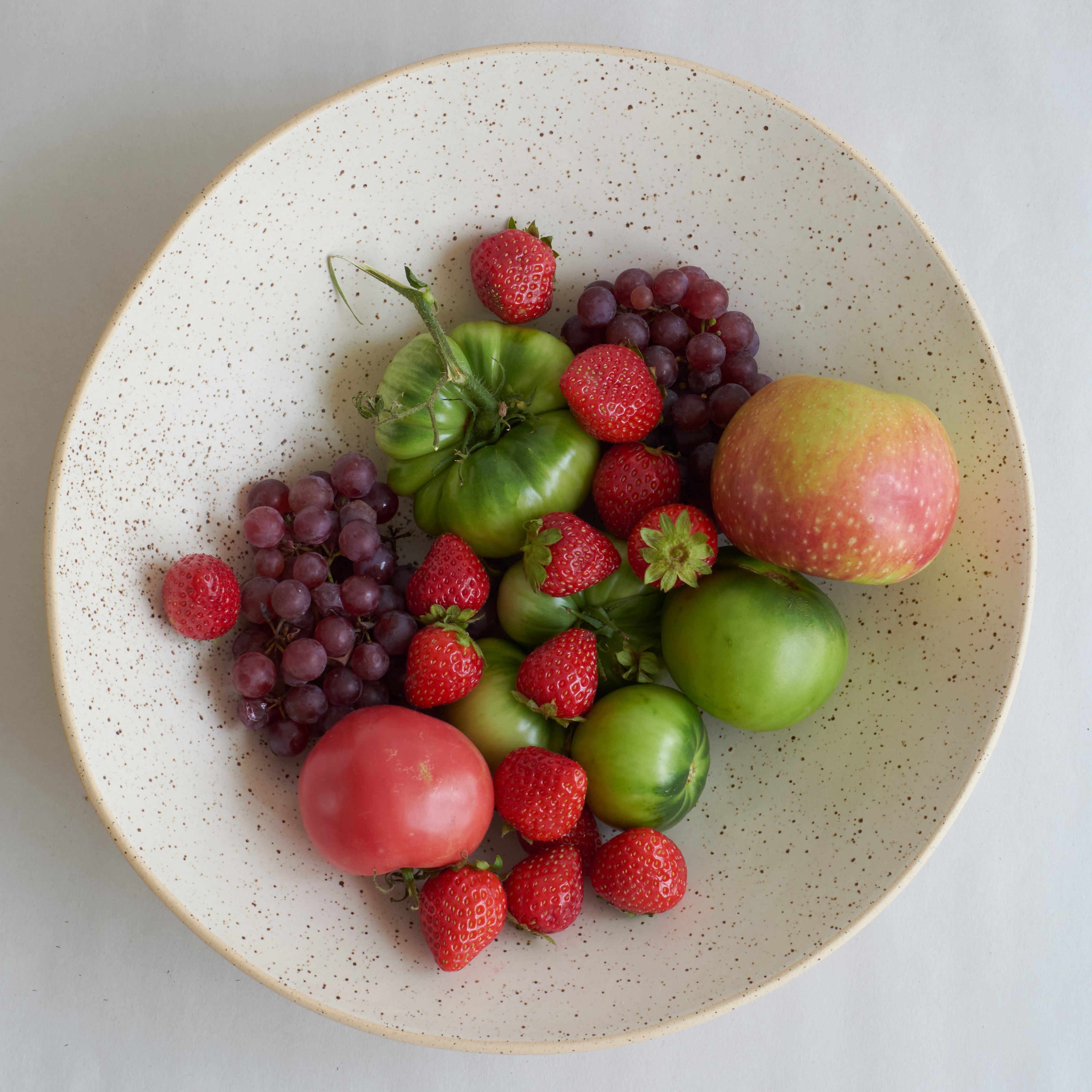


Traditional dyes and paints cannot be used to decorate ceramics. Since clay must be fired at very high temperatures (typically 900⁰C/ 1652⁰F and above) to fully harden, these materials would simply burn away. Instead, ceramic artists coat their pieces in glazes—mineral-based coatings that become glass-like when heated—to add color and texture.
What are glazes made of?
We create glazes using four essential components, silica, fluxes, alumina and oxides, that work together to form a stable, colored glass on the clay body:
- Silica: The primary ingredient that forms the glass.
- Flux: A component that lowers the silica's melting point, allowing it to fuse at attainable kiln temperatures.
- Alumina: This ingredient acts like glue, stabilizing the glaze and keeping it from running off the pottery during melting.
- Oxides: These are minerals added for color. They start the chemical reactions with the other ingredients, which determines the final hue.
There is an infinite variety of colors that can be obtained by mixing oxides and other compounds.
Why is it complex to make glazes?
Creating glazes is complex because we cannot rely on standard color theory. There's currently no software that can accurately predict the outcome before firing. Potters must manage a dozen complex factors, including:
- Glaze Chemistry: Ensuring all the ingredients (silica, flux, alumina, and colorants) melt and fuse together correctly.
- Clay Compatibility: Verifying that the glaze and the clay body match well, requiring separate tests for every type of clay used due to the countless variations in clay composition and firing temperatures.
- Kiln Environment: Understanding that each glaze mix reacts differently based on the temperature rise, timing, and atmospheric conditions.
Ceramists, therefore, develop colors the hard way, through making many tests and learning from experience. This iterative process can take a career to develop; the resulting recipes are often closely guarded trade secrets. It is an integral part of the ceramist’s artistic approach.
How are glazes applied?
Glaze materials are mixed with water to create a liquid coating. Ceramists can either dip, paint/brush, or spray their pieces.
Some add decorative effects like underglazes, stains, and overglazes: these are like glazes but differ in the timing of their application (either during the first firing, the glaze firing, or a third firing). Overglazes, for instance, require a third, low-temperature firing. They are stable and enable intricate drawings, like delicate gold rims or detailed enamel work, as seen in the work of Yukari Hazama Iverson.
Other techniques rely on introducing materials directly into the kiln atmosphere:
- Salt Glazing: Involves throwing salts onto the pieces while they are in the kiln (mostly gas or wood). This technique yields an organic and spontaneous look but is damaging to electric kiln elements.
- Shino Glazes: These glazes, which contain soda, are known for yielding an opaque, often textured color.
- Wood ash, which gives off different effects depending on its molecular makeup. Using wood ash is not only an artistic choice but also a trace of history, as the molecules contained within reflect the environment where the wood grew.
Do all vessels need to have a glaze?
No, not all ceramic vessels technically need a glaze to be functional.
- Non-Porous Clays: Clays like stoneware and porcelain vitrify (become glass-like) at the high temperatures required for their firing. Because they are technically non-porous in their natural state, they do not require a glaze to hold water.
- Porous Clays: Earthenware clays, however, are fired at lower temperatures and remain porous in their natural state. Therefore, functional earthenware pieces must be glazed to seal the ceramic and make them functional for holding liquids
Are there commercial glazes available?
Yes, commercial glazes are widely available and are formulated to offer consistent and predictable colors. However, creating glazes provides infinite possibilities and creative freedom, which artists at Houmain seek to provide in their unique work.
