

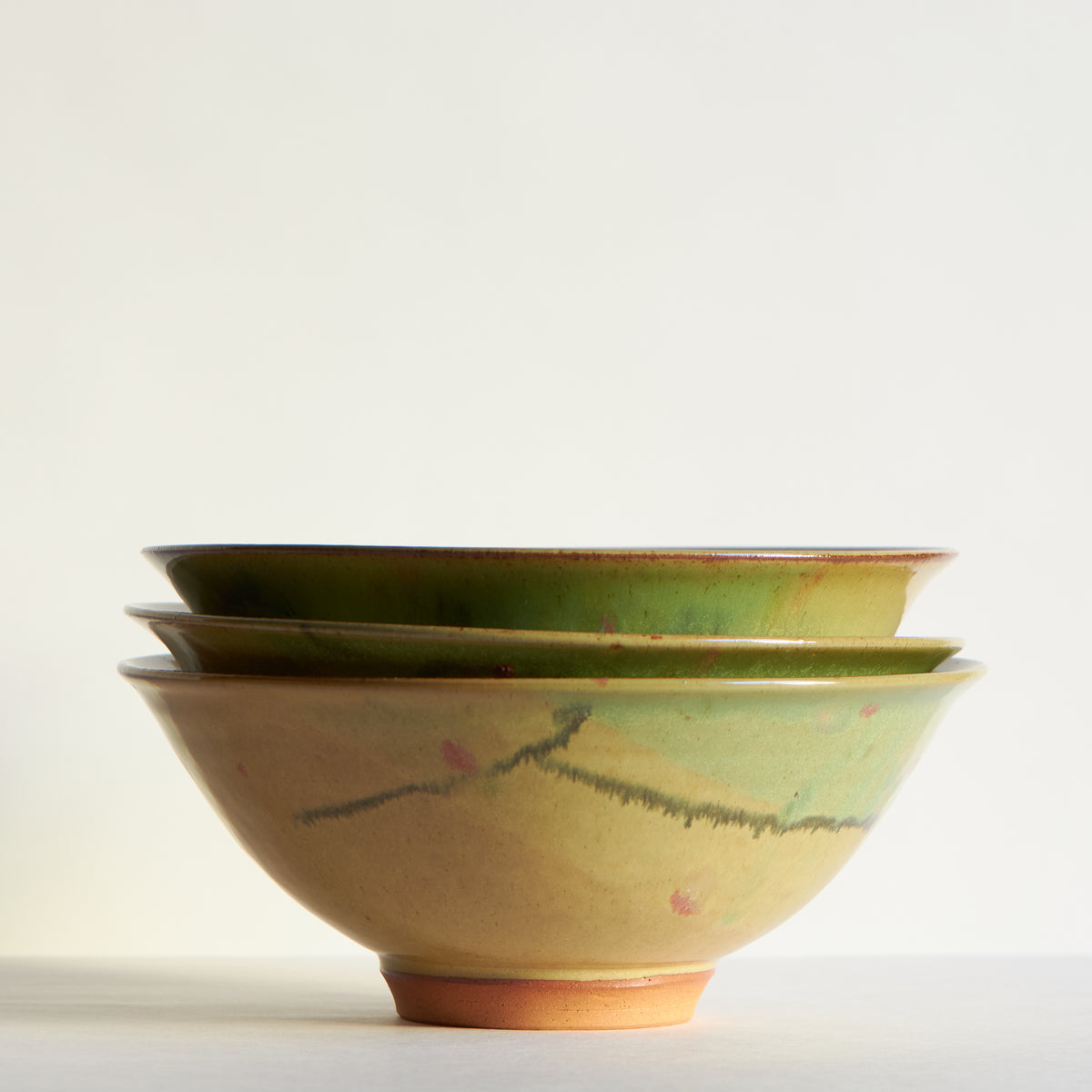
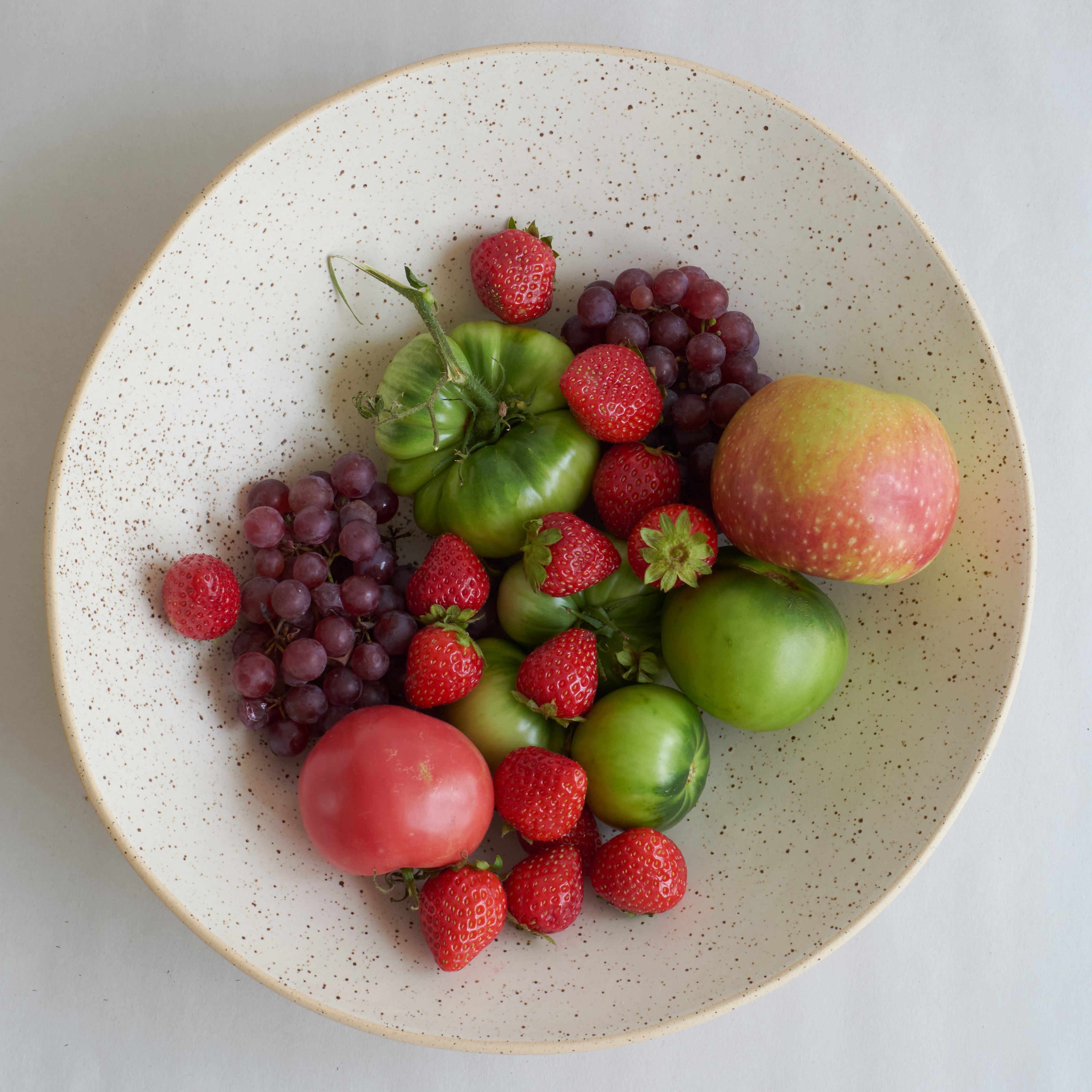


For thousands of years, people have baked clay objects in ground fire pits to make ceramics, a technique still used today. However, to achieve specific, reproducible results, ceramists use specialized ovens known as kilns which yield more control over temperature and oxygen levels. The kiln type, temperature, and firing time—the process of exposing clay to hours of high heat to harden—grant the ceramist a wide range of artistic freedom to create lively pieces.
Most potters fire their pieces twice. First, they perform a firing at a low temperature, called bisque, to make pieces sturdy enough to apply a glaze, a mineral-based coating to color and texturize a piece. Second, they perform a firing at intense temperatures that can reach 1,400⁰C (2,552⁰F), to melt glaze minerals, revealing a vivid, final piece. There are two types of kilns, which generate heat through electricity or combustion:
Electric kilns
Electric kilns generate heat when an electrical current passes through wire elements embedded in refractory bricks—heat-resistant ceramic blocks. They are appropriate for low to mid-firing temperatures (between 900°C/1,652°F and 1,220°C/2,228°F), suitable for earthenware, stoneware and some types of porcelain.
In the industry, we call this oxidation firing. This process occurs when oxygen present in the kiln, combined with heat, reacts with the metallic components in glazes, much like iron rusting when exposed to air. The glazes take on their oxidized form and shift in color, producing a bright palette. Depending on the glaze recipe and the amount of metal oxides used, copper can yield greens, while iron produces reddish or brownish tones.
Combustion kilns
Combustion is a chemical process in which fuel reacts rapidly with oxygen and generates heat, as NASA defines it. In ceramics, we use wood or gas as fuel to start the combustion process in a kiln. Because they require chimneys and generate combustion gases, they are rarer in densely populated urban areas. Combustion kilns are valued by ceramic artists for the distinctive surface effects they produce.
Gas kilns
Gas kilns allow potters to control oxygen levels and sustain temperatures up to 1,400°C—hot enough to vitrify high fire porcelain. They also enable techniques such as reduction—a process of removing oxygen to alter the color and texture of glazes—as well as specialized methods like salt or soda firing. While technically possible with electric kilns, these specialized methods are rarely used as they accelerate the deterioration of the heating elements. Operating a gas kiln requires mastery. Potters must carefully manage burners, monitor oxygen levels, and handle the risks associated with combustion gases like carbon monoxide.
The reduction process begins when the ceramist limits the oxygen supply, causing incomplete combustion. Once the available oxygen is consumed, the resulting carbon monoxide begins to ‘steal’ oxygen atoms from the metallic compounds in the glazes. This chemical reaction alters the glaze’s color—for example, copper can turn vibrant red, and iron can produce a jade green tone, famously seen in celadon glazes developed in ancient China.
Wood kilns
Potters have used wood firing since the beginning of ceramics. Ancient potters from Greece, the Middle East and East Asia were masters of fire. Eastern Asian potters built kilns that could reach the necessary temperatures to fire stoneware and vitrify porcelain—around 1,300°C. Wood firing is physically intensive, requiring the kiln to be constantly fed for many hours, or even days, to maintain temperature. Some large wood kilns take weeks to cool down.
Ash from the wood interacts with the pottery surface. It melts into glazes of their own, while the flame leaves behind unique flashing patterns, giving pieces a distinctive character. Like gas firing, it is possible to create a reduction kiln atmosphere.
Understanding firing methods helps us appreciate the depth of craftsmanship and the work involved behind every ceramic piece. At Houmain, we value the story behind the surface and the artistic choices that shape each piece.
Sources and Further Readings
- Belleau, Mimi. Technologie des matériaux céramiques. Ateliers d'art de France, 2024.
- Glenn C. Nelson. Universitty of Minnesota, Duluth. Ceramics A Potter's Handbook. Holt, Rinehart and Winston, Inc., 1971.
